
OFFLINE CBT VS PAPER EXAMS: WHAT NIGERIAN SCHOOLS SHOULD CONSIDER BEFORE MAKING THE SWITCH
Unstable internet access remains a real barrier for many Nigerian schools considering a move to computer-based testing. The Nigeria Union of Teachers has raised this exact concern as the country moves toward a planned transition to full computer-based testing for public examinations by 2027, warning that many schools, particularly in rural communities, still lack the infrastructure and internet access needed to support it.
This is the environment school administrators are actually working in when they consider moving away from paper-based examinations. The conversation is not just about convenience. It is about choosing an assessment method that is practical, reliable and suited to the realities of their school.
WHY SCHOOLS STILL RELY ON PAPER BASED EXAMS
Paper based examinations remain the standard in many Nigerian schools because they are familiar and do not depend on technology or internet access. However, they also involve printing question papers, distributing and collecting scripts, and manually marking each one.
The time and cost involved vary from one institution to another depending on student population, examination frequency and existing administrative processes. Because these costs differ widely, this article does not assign specific figures.
WHY INTERNET ACCESS IS A MAJOR TO CBT ADOPTION
For many schools, the biggest challenge is not computer-based testing itself. It is the internet.
Rising data costs and inconsistent connectivity make fully online CBT platforms difficult to rely on during examinations. A dropped connection risks interrupting an exam and delaying the assessment process for students and administrators.
This is one of the main reasons many schools continue using paper-based examinations even when they want to modernise.
HOW OFFLINE CBT REMOVES THAT BARRIER
Offline CBT takes internet reliability out of the equation.
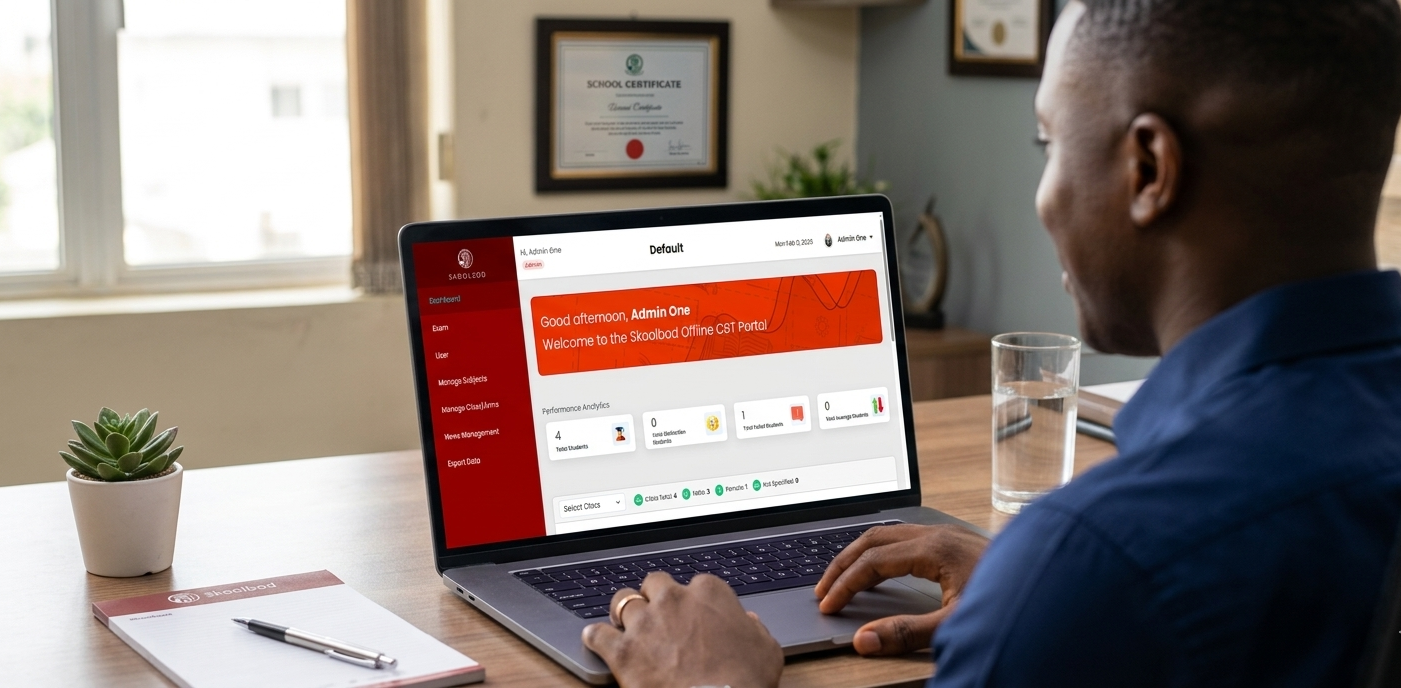
Novu Offline CBT runs on a local network through LAN, Wi-Fi or mobile hotspot. Students connect to the examination server using its IP address, allowing examinations to take place without relying on external internet connectivity.
This gives schools a controlled examination environment while avoiding one of the biggest obstacles to CBT adoption.
HOW OFFLINE CBT SIMPLIFIES EXAM ADMINISTRATION
Offline CBT also reduces several manual tasks that are part of traditional examination processes.
WITH NOVU OFFLINE CBT:
- Multiple choice and objective questions are graded automatically after submission, reducing manual marking for those sections.
- Automatic timing and submission help manage examination sessions without continuous manual supervision.
- Question banks with randomisation present questions in different sequences for students, helping reduce opportunities for answer sharing.
- Setup takes under five minutes on Windows and requires minimal technical knowledge to get started.
WHO CAN BENEFIT FROM OFFLINE CBT
Offline CBT is suitable for more than secondary schools.
Novu Offline CBT can be used by schools, tutorial centres, universities, professional training institutes and organisations conducting certification examinations or recruitment assessments. It is also WAEC CBT ready.
WHAT SHOULD SCHOOLS CONSIDER?
The choice between paper-based examinations and offline CBT depends on your institution’s size, examination frequency, available resources and administrative needs.
While every school is different, offline CBT removes the internet dependency that discourages many institutions from adopting computer-based testing. It also reduces several manual examination processes that consume staff time during and after assessments.
For schools looking to modernise examinations without relying on stable internet access, offline CBT provides a practical and reliable alternative worth considering.
Ready to see how Novu Offline CBT can work for your institution?
Book a free demo at skoolbod.com/request-demo or contact info@zenkleus.com to learn more.